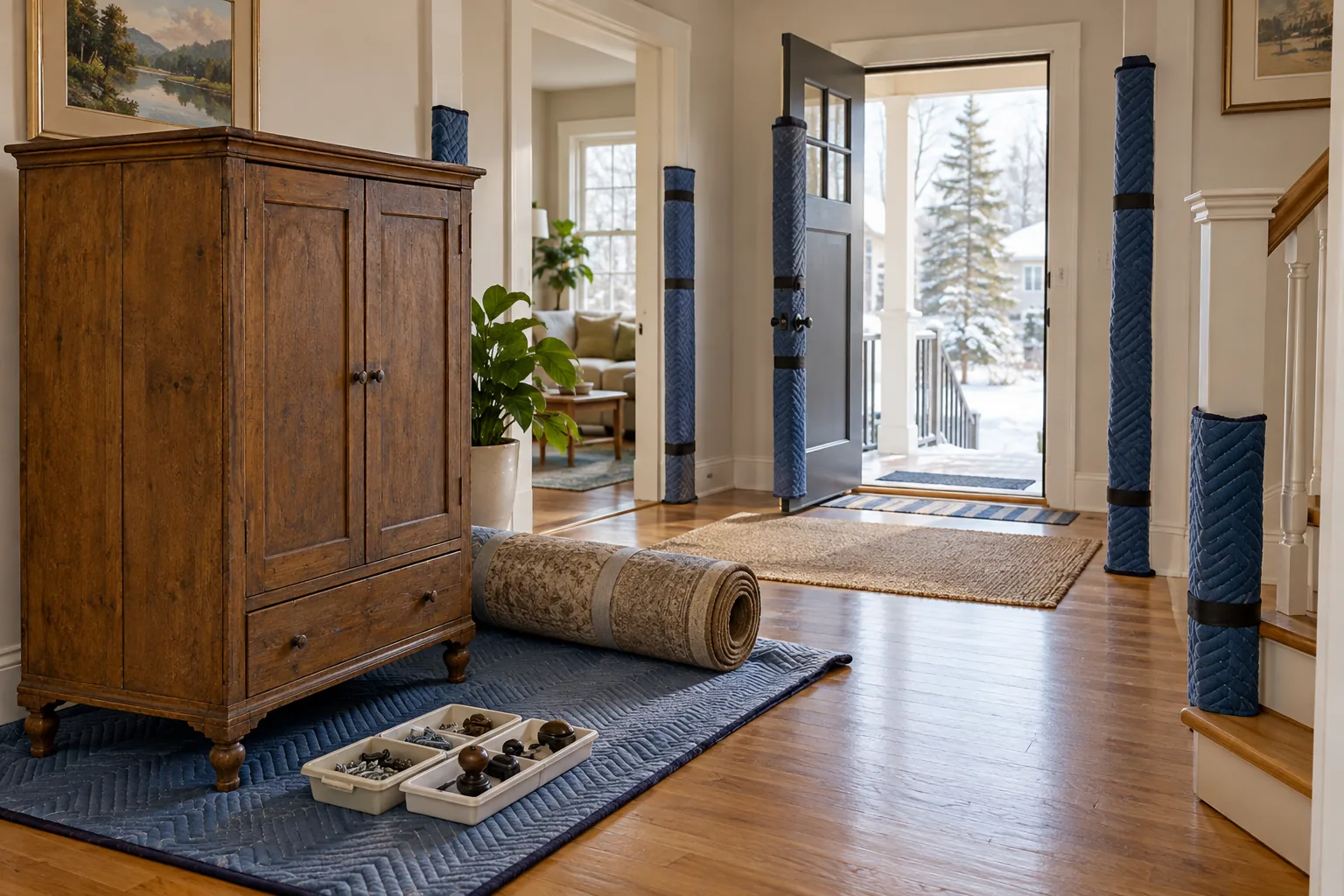
A clearer home begins with decisions about possessions, then a removal plan that protects what still matters.
Set the stage and the boundary
Work through keep, remove and unresolved groups before scheduling. Single-room clear-out, downsizing clear-out and storage locker emptying can address different stages of the same household decision, but each needs its own authorised inventory. Separate moving possessions from permanent take-away. Family disagreements, valuation and ownership questions should be resolved by the appropriate people rather than delegated informally to a collection crew.
Resolve the practical dependencies
Protect private information and identify restricted material. Financial papers, identity records, medication, keys and data-bearing electronics need their own treatment. Ordinary electronic collection does not certify data destruction. Paints, fuels, chemicals and refrigerant appliances should be disclosed separately so their suitable destinations can be confirmed. Donation is conditional on actual recipient acceptance, not a promise attached to every usable-looking object.
Plan the work and the handoff
Plan the route and collection stages. A large sofa, mirrored wardrobe or heavy table needs dimensions, construction and stair information. Lift bookings, facility hours and loading access should be confirmed. Staged collections can help protect unresolved decisions in downsizing or estate work. Agree how additions change labour, trips or destination requirements before they are loaded, and record the cleanup level included.
Make the next step concrete
Reconcile the finished space against the list. Note uncollected items, newly visible damage and the condition of walls and floors. Empty contents do not automatically mean deep cleaning or repairs are complete. Installing can later fit first storage, Replacing can renew existing systems and Upgrading can redesign the room’s capability. Give HAUSE the inventory and desired final condition to turn a broad clear-out intention into a reviewable scope.
A practical sequencing example
For a downsizing project, compare the retained furniture with the destination room before authorising collection. Keep pieces awaiting measurement in the unresolved group and reconcile every staged visit against its own list. This protects decisions made for the next home while allowing the unwanted contents to leave through a clear, realistic destination plan.
Confirm readiness for the next stage
After clearance, review the newly available space before ordering storage. Remaining dampness, damaged finishes or an unsuitable route may need their own assessment. The removal record can support that discussion while keeping new fitting, repairs and broader room improvements with the appropriate family scope.
- Keep, remove and unresolved lists created
- Authorised decision maker identified
- Private and restricted items separated
- Access and collection stages agreed
- Final inventory and cleanup condition reviewed