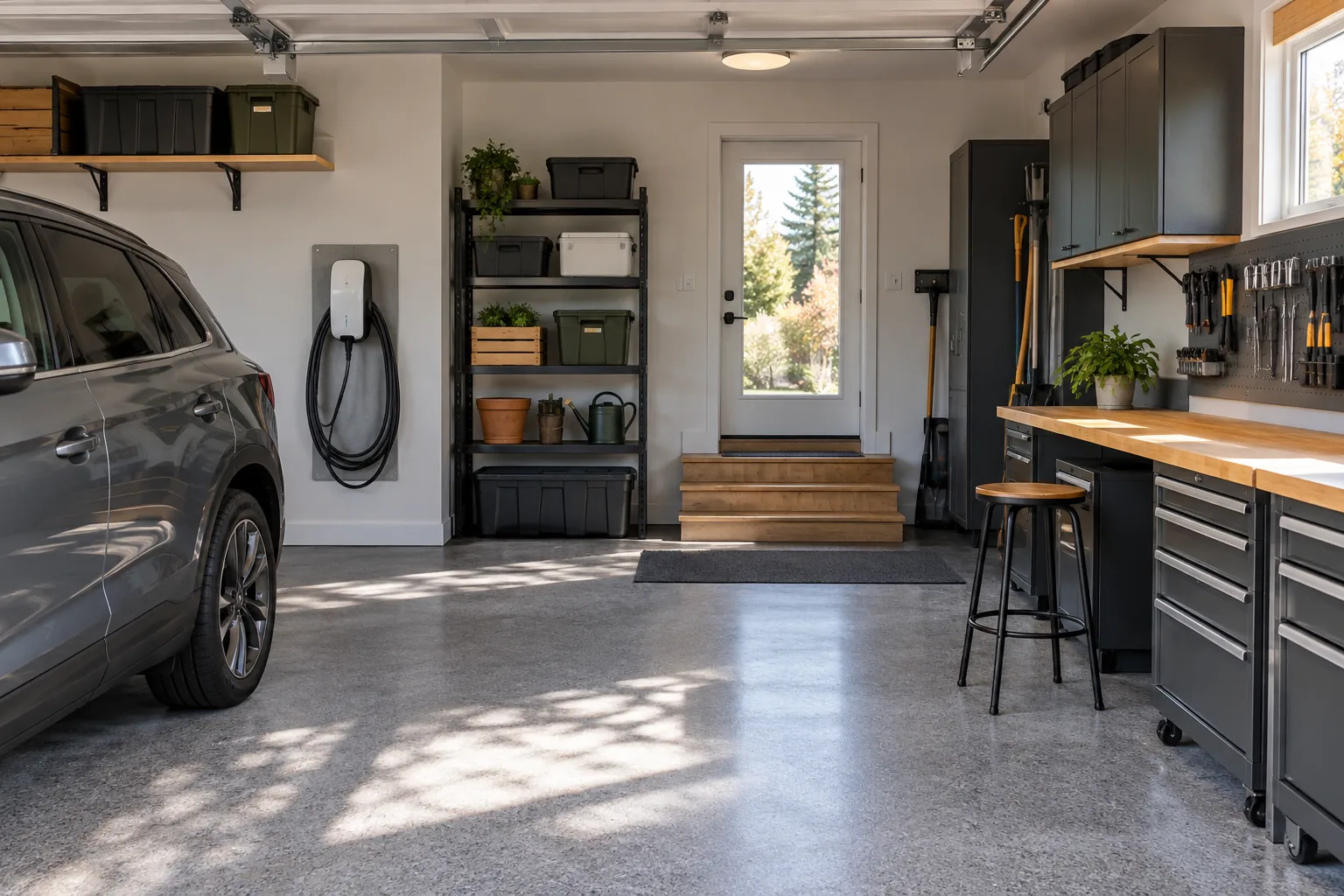
A garage clear-out should separate everyday clutter from fuels, chemicals and equipment with special handling needs.
Resolve the important fit decisions
Record the items to leave and preserve tools, keys and vehicle equipment that stay. Identify containers by their known contents without opening or mixing unknown products. Ask for the proposed arrangement to be described before products, dates or connected work are committed. Photographs help establish the brief; concealed conditions may still need a visit.
Coordinate the surrounding work
Review lifting access, fixed storage and any connected appliances. Confirm suitable destinations for restricted materials rather than hiding them inside a mixed load. Record what the quoted work assumes about the room and identify who will address a condition that falls outside those assumptions. That keeps the next step practical and comparable.
Define a useful finished result
Agree a cleared storage footprint and the cleanup level, with unresolved materials documented. Send HAUSE the relevant measurements, accessible photographs and your preferred outcome. A focused enquiry gives the provider a better starting point for confirming scope, suitability and availability.
What shapes the scope?
- Contents and fixed units
- Restricted material coordination
- Vehicle and loading access
- Sorting and destination trips
What should be checked?
- Retained items checked
- Restricted items accounted for
- Cleared floor condition reviewed
Questions worth asking
Can paint and fuel go with general rubbish?
No. Use the appropriate local handling route and disclose them before collection.
Does garage clearance include removing wall cabinets?
Only if listed with their fixing and any service conflicts assessed.
Bring the details together.
Add this service to My project. Tell HAUSE what you have, what you want to achieve and where the work is needed. A clearer brief makes it easier to discuss the right assessment, responsible trades and written scope.
Build my project brief ↗