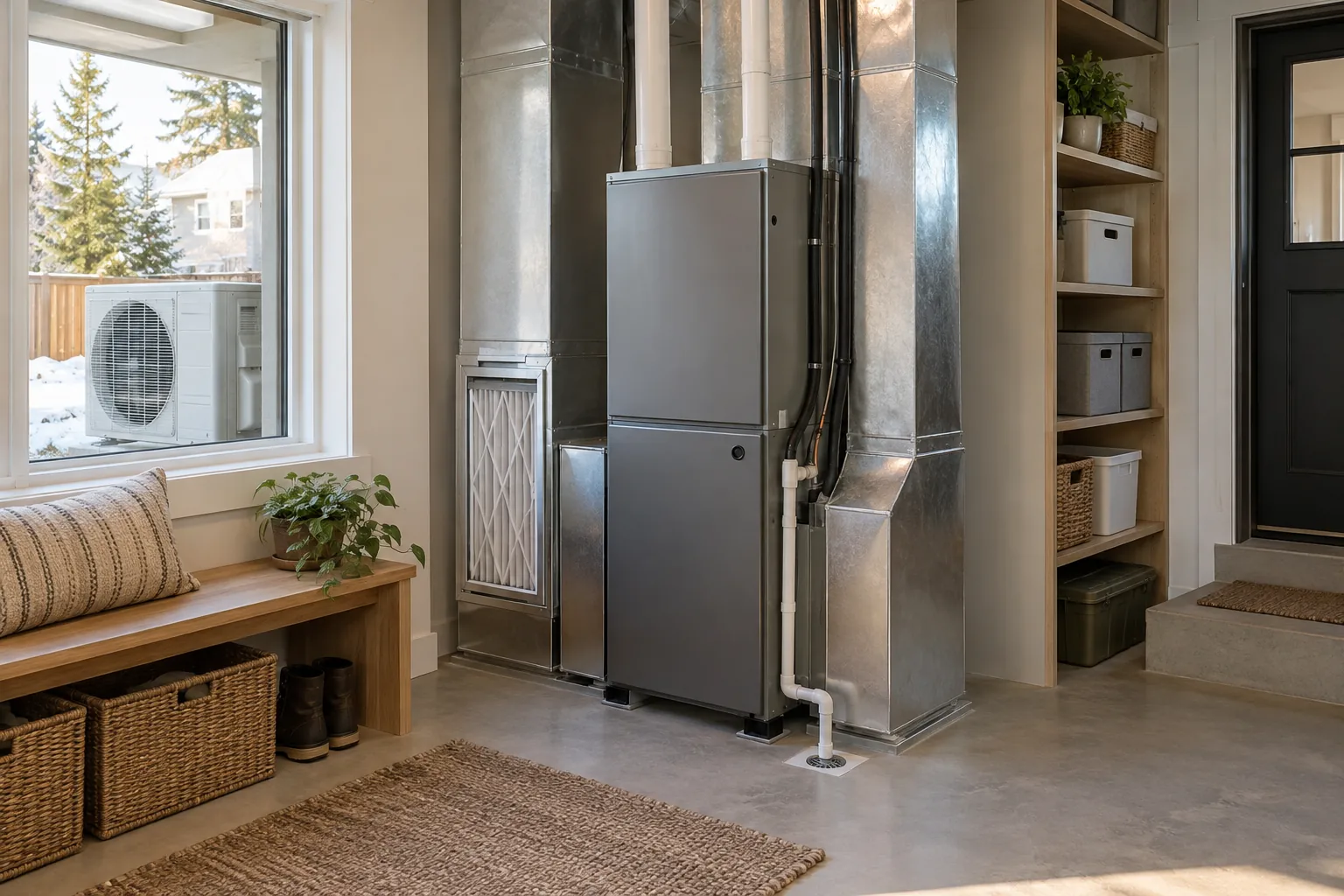
Obsolete furnace removal requires a qualified disconnection and a clear boundary around ducts, venting and controls.
Resolve the important fit decisions
Identify fuel, equipment dimensions and any connected cooling or air-treatment components. Review how the unit reaches the exit without damaging the remaining system. Ask for the proposed arrangement to be described before products, dates or connected work are committed. Photographs help establish the brief; concealed conditions may still need a visit.
Coordinate the surrounding work
Have the responsible professionals define utility isolation and the safe condition of unused vents, drains, wiring and duct openings. Record what the quoted work assumes about the room and identify who will address a condition that falls outside those assumptions. That keeps the next step practical and comparable.
Define a useful finished result
Agree the collected equipment list and documentation of remaining-system conditions for the next heating provider. Send HAUSE the relevant measurements, accessible photographs and your preferred outcome. A focused enquiry gives the provider a better starting point for confirming scope, suitability and availability.
What shapes the scope?
- Furnace and connected components
- Qualified disconnection
- Duct and vent boundaries
- Access and hauling
What should be checked?
- Services made safe
- Equipment list reconciled
- Remaining openings recorded
Questions worth asking
Does furnace removal include removing all ducts?
Only the specified duct sections. Retained distribution and building penetrations need a clear handoff.
Can removal proceed while the household relies on the furnace?
Coordinate safe heating continuity with the appropriate provider before the removal date is agreed.
Bring the details together.
Add this service to My project. Tell HAUSE what you have, what you want to achieve and where the work is needed. A clearer brief makes it easier to discuss the right assessment, responsible trades and written scope.
Build my project brief ↗