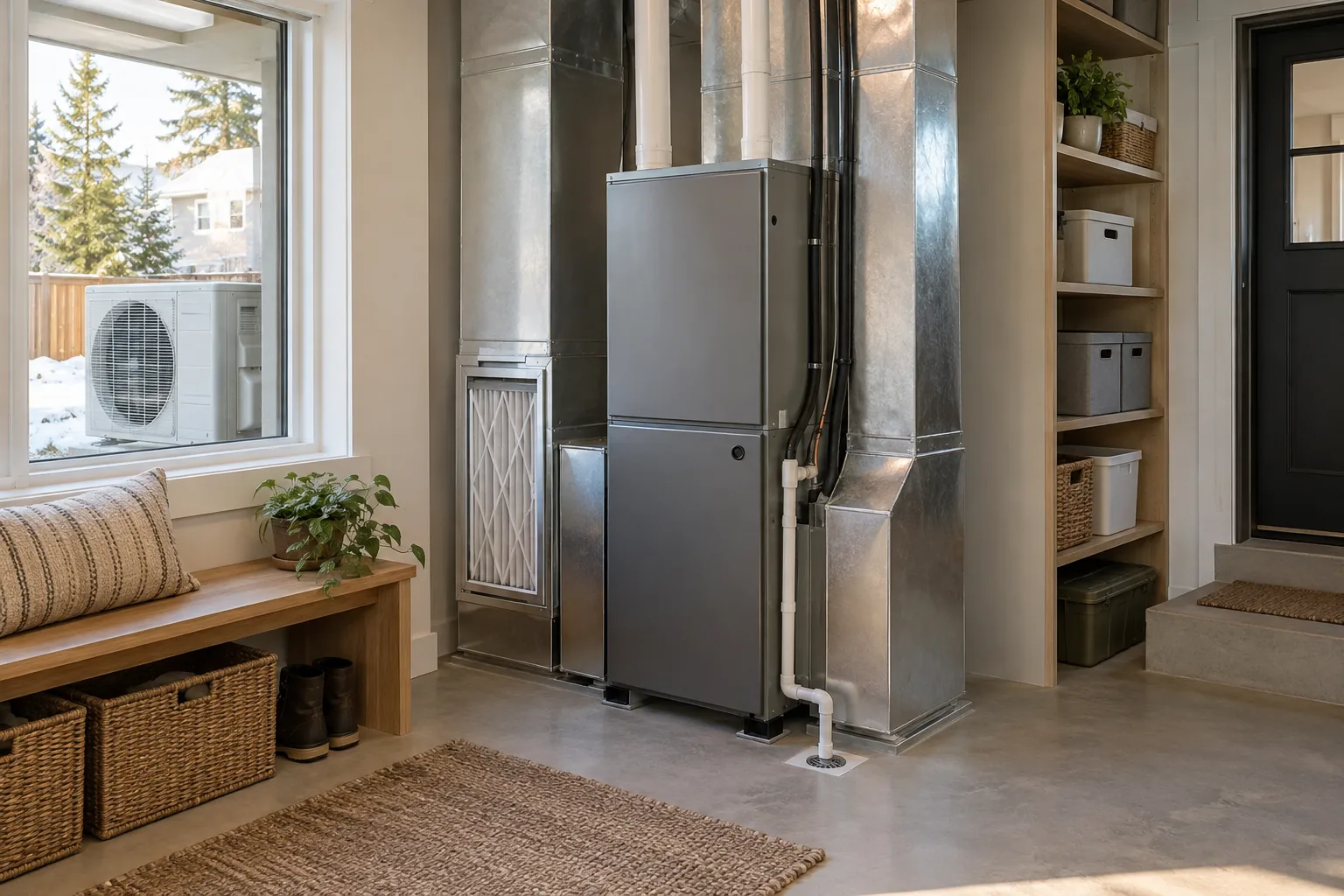
Lift-equipment removal should preserve the user’s support arrangements before the equipment leaves.
Resolve the important fit decisions
Identify stair-lift or transfer equipment, ownership and the authorised removal reason. Coordinate a suitable alternative where the user relies on it. Ask for the proposed arrangement to be described before products, dates or connected work are committed. Photographs help establish the brief; concealed conditions may still need a visit.
Coordinate the surrounding work
Use appropriate specialists to assess power, mechanisms, supports and building interfaces. Do not treat fixed rails or charged systems as ordinary scrap. Record what the quoted work assumes about the room and identify who will address a condition that falls outside those assumptions. That keeps the next step practical and comparable.
Define a useful finished result
Request a component inventory, safe remaining services and documented wall, stair or ceiling condition. Send HAUSE the relevant measurements, accessible photographs and your preferred outcome. A focused enquiry gives the provider a better starting point for confirming scope, suitability and availability.
What shapes the scope?
- Equipment and ownership
- User continuity arrangements
- Specialist decommissioning
- Support repairs and destination
What should be checked?
- Authority confirmed
- User support addressed
- Remaining condition recorded
Questions worth asking
Does removal include a clinical reassessment?
Only if separately provided by the appropriate professional; include existing recommendations in the brief.
Can leased equipment be discarded?
Confirm the owner’s return or decommissioning instructions before agreeing disposal.
Bring the details together.
Add this service to My project. Tell HAUSE what you have, what you want to achieve and where the work is needed. A clearer brief makes it easier to discuss the right assessment, responsible trades and written scope.
Build my project brief ↗