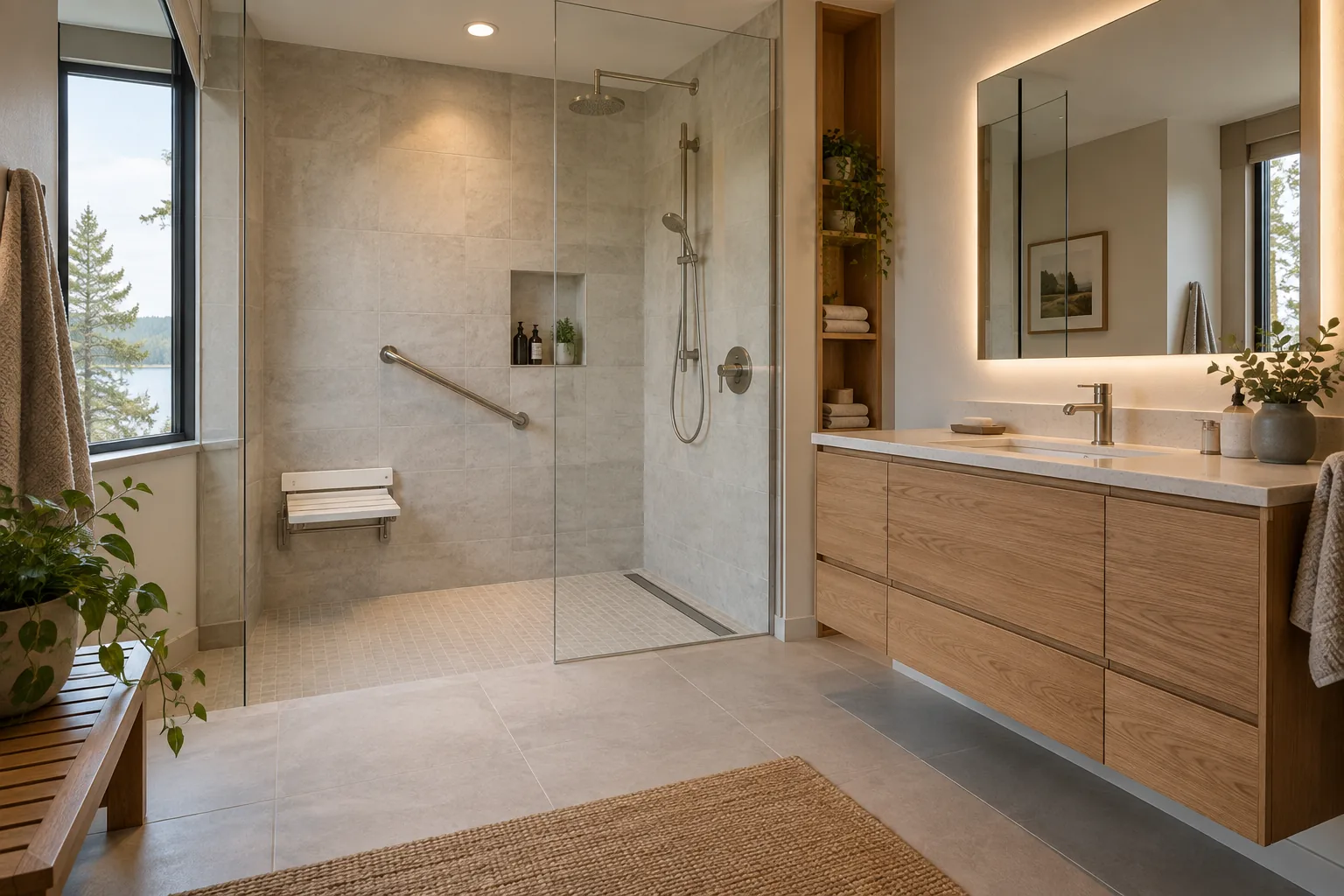
Bathroom accessory take-away should protect retained tile and identify the condition of wet-area penetrations.
Resolve the important fit decisions
List rails, holders, hooks and other fittings individually. Distinguish decorative accessories from support equipment the user relies on. Ask for the proposed arrangement to be described before products, dates or connected work are committed. Photographs help establish the brief; concealed conditions may still need a visit.
Coordinate the surrounding work
Review fixing or adhesive method and the existing waterproofing assembly. Removing a fitting may leave holes that need a compatible repair detail. Record what the quoted work assumes about the room and identify who will address a condition that falls outside those assumptions. That keeps the next step practical and comparable.
Define a useful finished result
Agree collected parts and the final tile, seal and wall condition. Send HAUSE the relevant measurements, accessible photographs and your preferred outcome. A focused enquiry gives the provider a better starting point for confirming scope, suitability and availability.
What shapes the scope?
- Accessory count and fixing
- Tile and backing condition
- Waterproofing repair detail
- Access and finish boundary
What should be checked?
- Support needs addressed
- Retained tile reviewed
- Penetrations recorded
Questions worth asking
Can a grab rail be removed without another plan?
Review the user’s support needs first. Do not treat essential support equipment as ordinary decoration.
Does filling a visible hole restore waterproofing?
Not automatically. The relevant assembly and repair detail need appropriate assessment.
Bring the details together.
Add this service to My project. Tell HAUSE what you have, what you want to achieve and where the work is needed. A clearer brief makes it easier to discuss the right assessment, responsible trades and written scope.
Build my project brief ↗