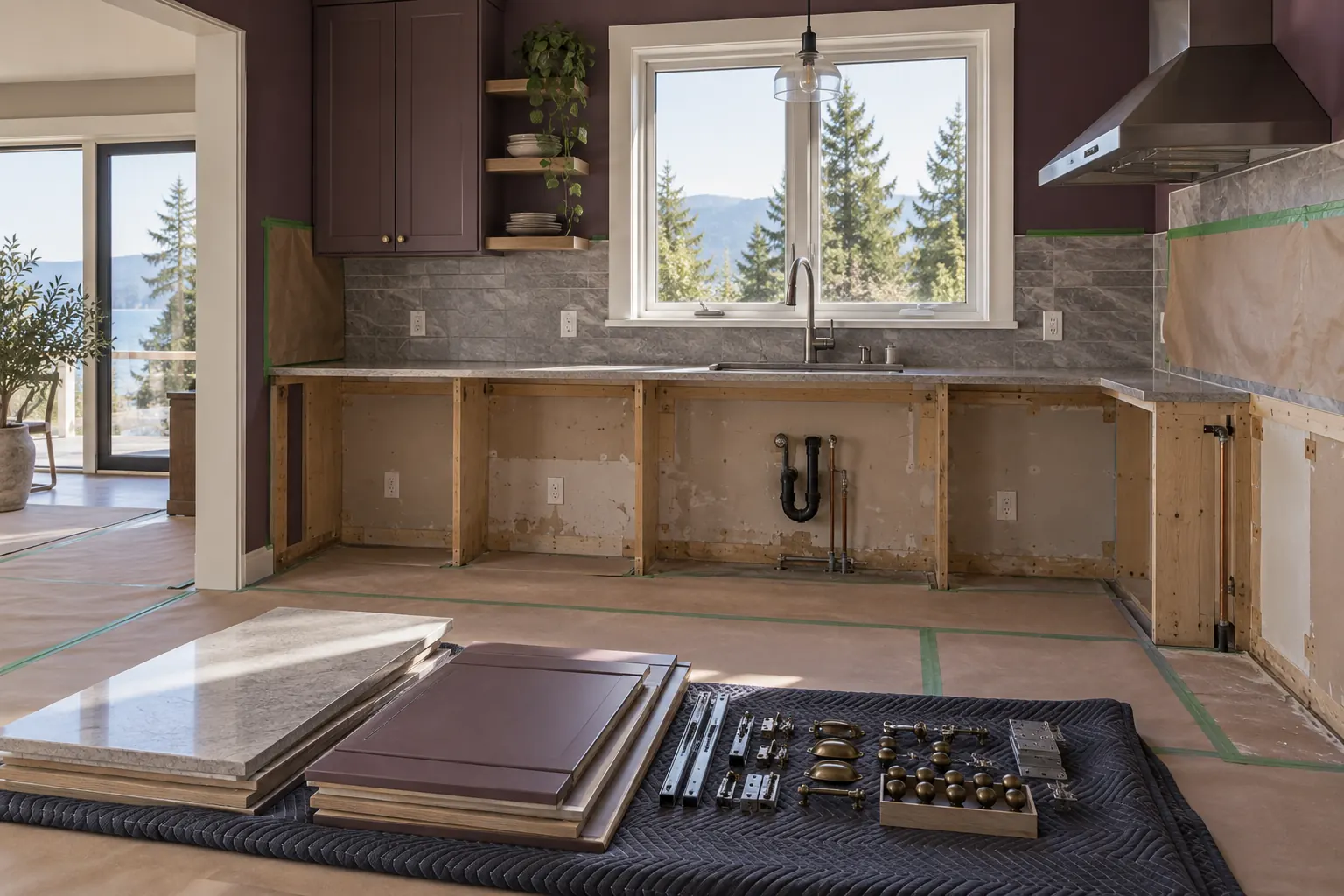
Mark what stays
Photograph cabinets, appliances, flooring, walls and services before work. Use a marked plan or clear list so an intact item is not treated as part of the clearance. Confirm who is authorized to make a change if hidden conditions appear.
Sequence the disconnections
A sink, cooktop or wired appliance can require a separate qualified trade. Agree when that work occurs, who arranges it and how the space is left safe between removal and the next stage.
Protect the route out
Document doors, stairs, lifts, floors and occupied rooms along the carrying path. Plan dust containment and whether reusable components are separated from demolition waste.
Choose the destination
Ask which materials can realistically be reused, recycled or need a specialist route in their actual condition. Do not assume everything removed from an older kitchen belongs in an ordinary mixed load.
Walk the handoff
The next trade should know the substrate condition, exposed services, retained supports and any damage found. Record the final state and open items in photographs and a brief written note.
Related service scopes
- Kitchen cabinet removal — Remove specified cabinetry while preserving agreed walls, services and retained components.
- Countertop removal — Remove an agreed worktop with sink disconnection, material weight and retained cabinet protection.
Make the plan practical.
Use the project planner to organize your own details, then choose the scopes that fit. HAUSE reviews enquiries; availability, qualifications, fees and terms are confirmed individually.
Use the plannerAuthoritative starting points
For older materials, read Health Canada’s asbestos guidance. For connected equipment, use the actual manufacturer’s installation and care manuals and confirm requirements with the responsible local authority and qualified provider.