Bulky furniture needs a route, a handling plan and a realistic destination.
Define the exact removal boundary
Describe the item beyond its name. A sofa may contain a sleeper or powered recliner; a dining table may have a heavy stone top; a wardrobe may carry mirrored doors. Include dimensions, materials and intended reuse. Specialist objects such as pianos and slate pool tables need suitable assessment rather than being assumed ordinary two-person furniture jobs.
Plan assessment, protection and access
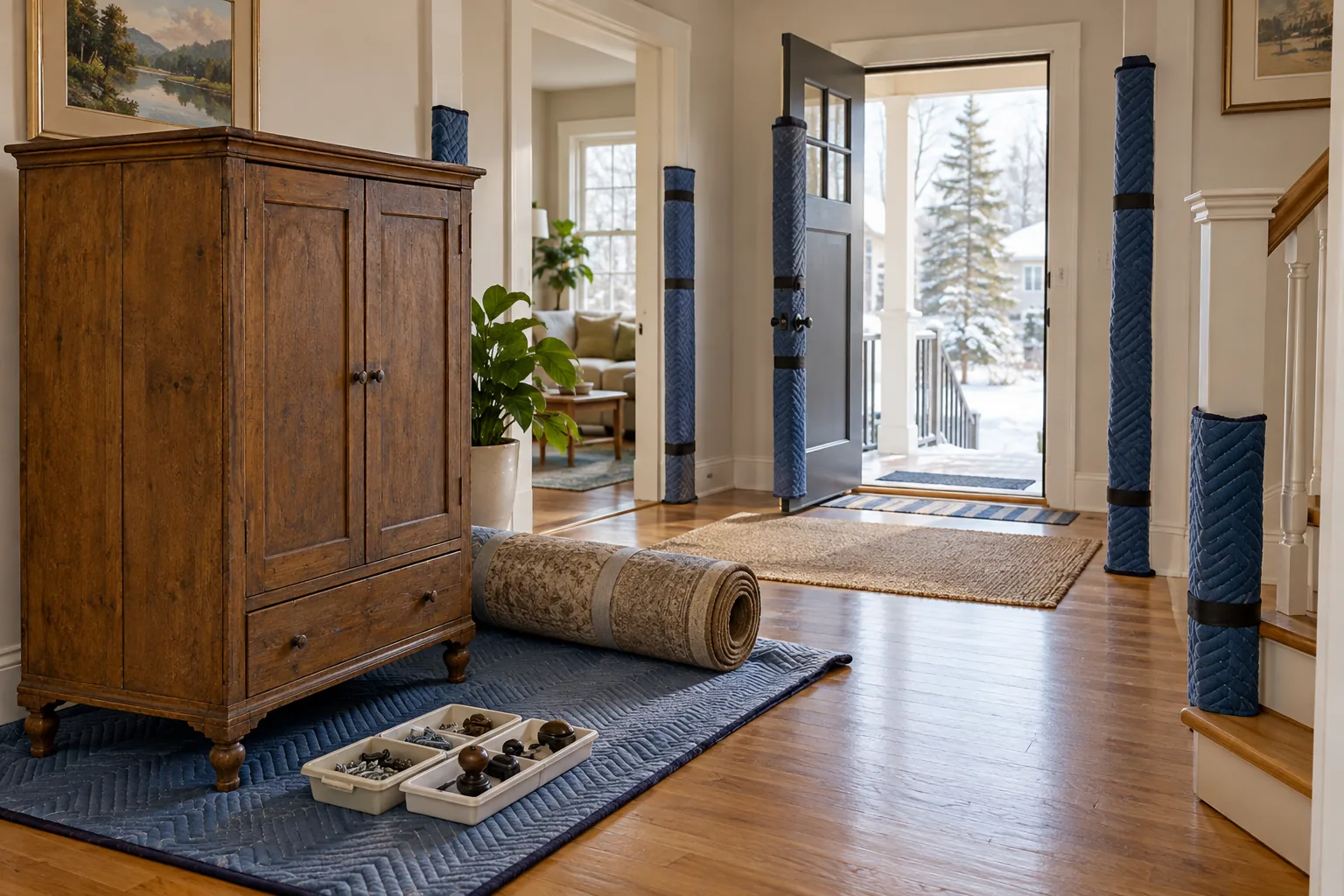
Review the entire route from the room to the vehicle. Doorways, stair turns, landings, lifts and loading restrictions affect the work. Agree any dismantling and who protects or reinstates doors and surfaces. Keep reusable hardware and components together where salvage is intended. The condition of the object and recipient acceptance determine whether donation is realistic.
Leave a documented next step
Close the job against the agreed list. Confirm all sections, accessories and bases are included or retained as intended, then review the cleared footprint and route. Removing owns the take-away stage. If a household is renewing a sofa, bed or other existing furnishing function, Replacing owns that wider request, even when delivery and assembly are necessary. First provision belongs with Installing.
Apply the brief to the actual home
If the route needs a door temporarily removed, record who reinstates its hardware and reviews its operation. Route preparation and final repair should be visible parts of the proposal rather than unspoken extras.
Details to bring into the conversation
- Do not promise salvage before assessing construction
- Disclose contamination and powered mechanisms
- Keep specialist handling distinct from general hauling